Griko in Italy?
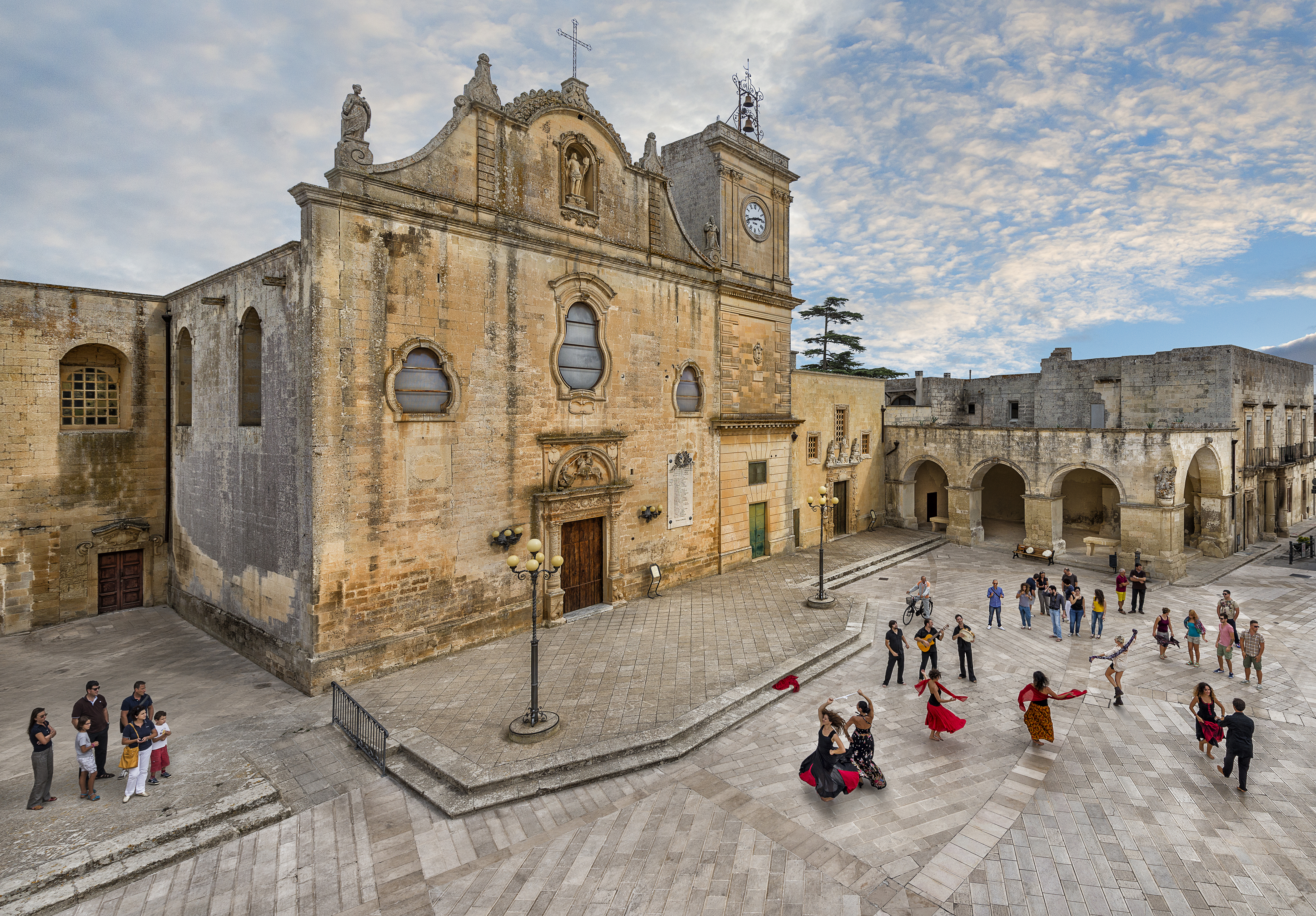
Grecìa Salentina is an area of Puglia, Italy featuring a unique group of towns southeast of Lecce where an ancient Greek dialect called Griko is still spoken. It represents the “Greek soul” in southern Italy. This Greek influence is characterized by whitewashed architecture, Byzantine influences, and traditions like the Taranta music festival.
Griko Language
A mix of ancient Greek, Byzantine, and Latin, this endangered language is still used by older generations and taught in schools.
Scholars debate whether Griko descends directly from the 8th-century BCE colonies of Magna Graecia or from later medieval Byzantine migrations. It preserves archaic features like Ancient Greek infinitives and vocabulary that has disappeared from Standard Modern Greek.
Unlike standard Greek, Griko is most commonly written using the Latin alphabet.
tThere are two primary dialect varieties:
Griko: Spoken in the Grecìa Salentina area of Apulia.
Greko (or Grecanico): Spoken in the Bovesia region of Calabria
.
Cultural Heritage
The Salento area is known for its “Greek-Byzantine” churches, such as St. Stefano(Soleto) and St. Caterina (Galatina)-
Santa Caterina Basilica, “Assisi of the South” has frescoes with the naturalism of the Giotto style, sharing the same mastery of color and human narrative pioneered by Giotto
This area is also famous for the Notte della Taranta music festival.
Byzantine Persistence
Following the Roman era, many parts of southern Italy, including Puglia, remained under Byzantine control until the 11th century, reinforcing Greek language, religion, and customs.
Atmosphere
These ancient towns offer a glimpse into authentic, slow-paced Southern Italian life, featuring historic centers, underground oil mills, and ancient megalithic monuments like dolmens and menhirs.
Origins
The area is believed to be settled by Greek populations in antiquity, maintaining a strong connection to Magna Graecia
The 12 Municipalities of Grecìa Salentina (2026)
 Calimera
Its name means “good morning” in Greek. Calimera is uniquely characterized by its 3,000 year-old Greek heritage, which is integrated into its name, language, and sacred rituals. The town’s public gardens house an ancient Attic burial stone (4th century BCE) donated by Athens in 1960. It bears the inscription: “Zeni su en ise ettù sti Kalimera,” meaning “You are not a stranger here in”. The House-Museum of Griko Culture is located in a traditional courtyard house, this museum preserves artifacts of peasant life and a library of 3,000 publications dedicated to the anthropological and linguistic roots of the Griko people. Calimera is a central hub for the revitalization of the endangered Griko dialect, maintaining strong cultural and emotional ties to Greece through specialized tours and educational efforts.
 Carpignano Salentino
 Castrignano dei Greci
Known as the “Castle of the Greeks”, Castrignano dei Greci is a treasury for the preservation of the Griko dialect of Salento. The town is a leading center for “active teaching” and recovery of the Griko language to ensure its 3,000-year-old roots are not lost.
Originally a medieval fortress, Castello Baronale (De’ Gualtieris) was transformed into a noble residence in the 16th century. It is well-preserved and offers a panoramic view of the surrounding countryside. As you walk through the historic center, you will encounter narrow streets and small communal courtyards known in Greek as àvili, a structural legacy of the ancient civilizations that inhabited the village.
 Corigliano d’Otranto
Home to the impressive Castello de’ Monti, this 16th-century fortress is the town’s symbolic landmark. It is renowned for its dual nature: a rugged medieval defensive structure with four massive circular towers and a moat, later “softened” with an ornate Baroque façade featuring allegorical statues and a richly decorated cantilevered balcony.
Check out the inscriptions on the beautiful ancient buildings around the town, lintels, arches and churches- you will find Italian, Latin and Griko.
 Cutrofiano
The town’s name reflects its heritage, deriving from the Greek word kutra (vase). In local dialect, typical clay containers are still called cutrubbi. Cutrofiano is widely recognized as the Ceramic Capitol of Salento. Visitors can still walk through the town to see active botteghe (workshops) where master potters use techniques passed down since the Middle Ages
Also check out theCrypt of San Giovanni. Located about 1km from the town center, this rock-cut (hypogeum) church features Byzantine fresco fragments and dates back to early medieval times.
Martano
Martano is the primary hub for the preservation of Griko, a Neo-Greek dialect. You can still hear residents speaking it, and almost every old family is known by a specific Griko name that defines their traditional talents.
Since 2017, Martano has been officially recognized for its large-scale cultivation and transformation of Aloe vera by local companies
 Martignano
The smallest of the Griko municipalities